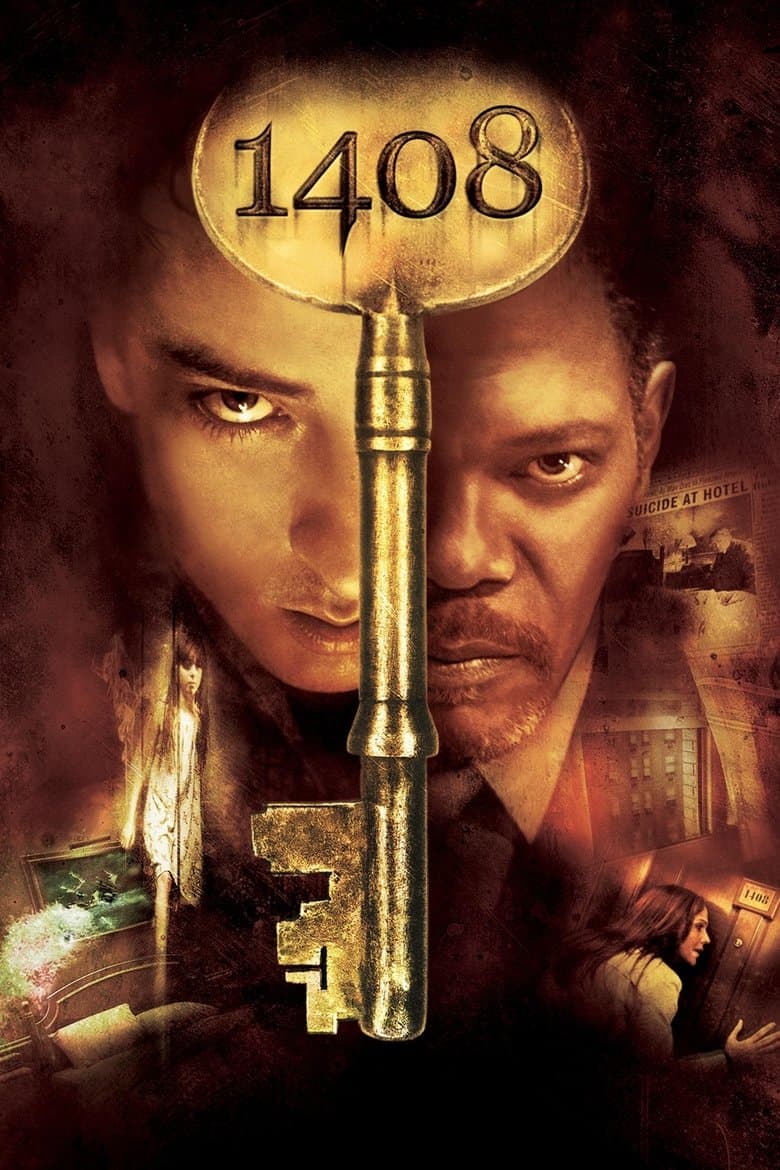
1408(2007)
Director
Mikael HåfströmCast
John Cusack as Mike Enslin, Samuel L. Jackson as Gerald Olin, Mary McCormack as Lilly Enslin, Jasmine Jessica Anthony as Katie, Tony Shalhoub as Sam Farrell
📝 剧情简介📝 Overview
《1408》是一部2007年上映的恐怖电影,改编自斯蒂芬·金的同名短篇小说。故事围绕迈克·恩斯林(约翰·库萨克饰)展开,他是一位专门揭露超自然现象骗局的作家,以冷静和理性著称。迈克周游各地,入住传说中闹鬼的酒店房间,并总能找到合理解释。在收到一封匿名明信片后,他决定挑战纽约海豚酒店中最臭名昭著的1408号房间——一个据称导致56人死亡、无人能住满一小时的禁地。酒店经理奥林(塞缪尔·杰克逊饰)苦口婆心地劝阻,但迈克执意入住。初入房间时,一切看似正常,但很快,房间开始以超自然方式扭曲现实,将迈克拖入一场无法逃脱的噩梦。电影聚焦于迈克在房间内的孤立挣扎,探索恐惧、记忆与救赎的主题。A man who specializes in debunking paranormal occurrences checks into the fabled room 1408 at the Dolphin Hotel. Soon after settling in, he confronts genuine terror.
📝 评价分析📝 Review & Analysis
Director Mikael Håfström crafts *1408* into a psychological horror masterpiece with a taut pace and exceptional atmosphere. John Cusack's one-man show performance is highly compelling, delicately portraying the character's descent from skepticism to breakdown, while Samuel L. Jackson's brief appearance leaves a lasting impression. Unlike Stephen King's concise, open-ended original story, the film expands the plot, adding more emotional layers (such as Mike's memories of his deceased daughter) and offering two different endings (the theatrical version is warmer, while the director's cut is darker). Within the horror genre, this film stands out with its "enclosed space" setting, emphasizing psychological torment rather than gore, and is hailed as one of the modern psychological horror classics. Although the original story is short and succinct, the film successfully retains the core of King's work—human vulnerability in the face of the unknown—by enriching the character's background and visualizing the fear.
🎭 Full Cast
Mike Enslin
Gerald Olin
Lilly Enslin
Sam Farrell
Mike's Father
Hotel Engineer
Bellboy
Mr. Innkeeper
📖 与原著的主要差异📖 How It Differs From the Book
The original novel ends with an open-ended conclusion where Mike either dies or falls into an eternal loop, while the film provides a definitive ending: in the theatrical version, Mike survives and reclaims his life, whereas the director's cut retains the darker setting of his death or entrapment.
In the original novel, Mike's background is vague, but the film deepens the traumatic experience of his daughter's untimely death, making the character more emotionally driven and closely linking it to the terrifying visions in the room (such as reenacting the scene of his daughter's death).
In the original novel, Mike quickly encounters supernatural phenomena after checking in, with a linear and concise plot. The film adds a longer buildup (such as the hotel manager's warning and recordings from other guests) and expands the complexity of multiple rounds of hallucinations within the room.
The original work leans more toward a cold, abstract psychological horror, emphasizing the fear of the unknown; the film, however, injects more drama and emotional themes, such as Mike reconciling with his daughter through visions, making the overall tone closer to mainstream horror films.
The film completely removes the subplot from the original novel where Mike discovers a mysterious diary in the room, instead focusing on his personal trauma and interaction with the room, making the narrative more concentrated.